NOCTURNAL CONDITIONS
Andrew Curwen FW26
![]()
Words Lily Moskowitz
Photo & Video Kaden Bard Dawson
02.20.2026
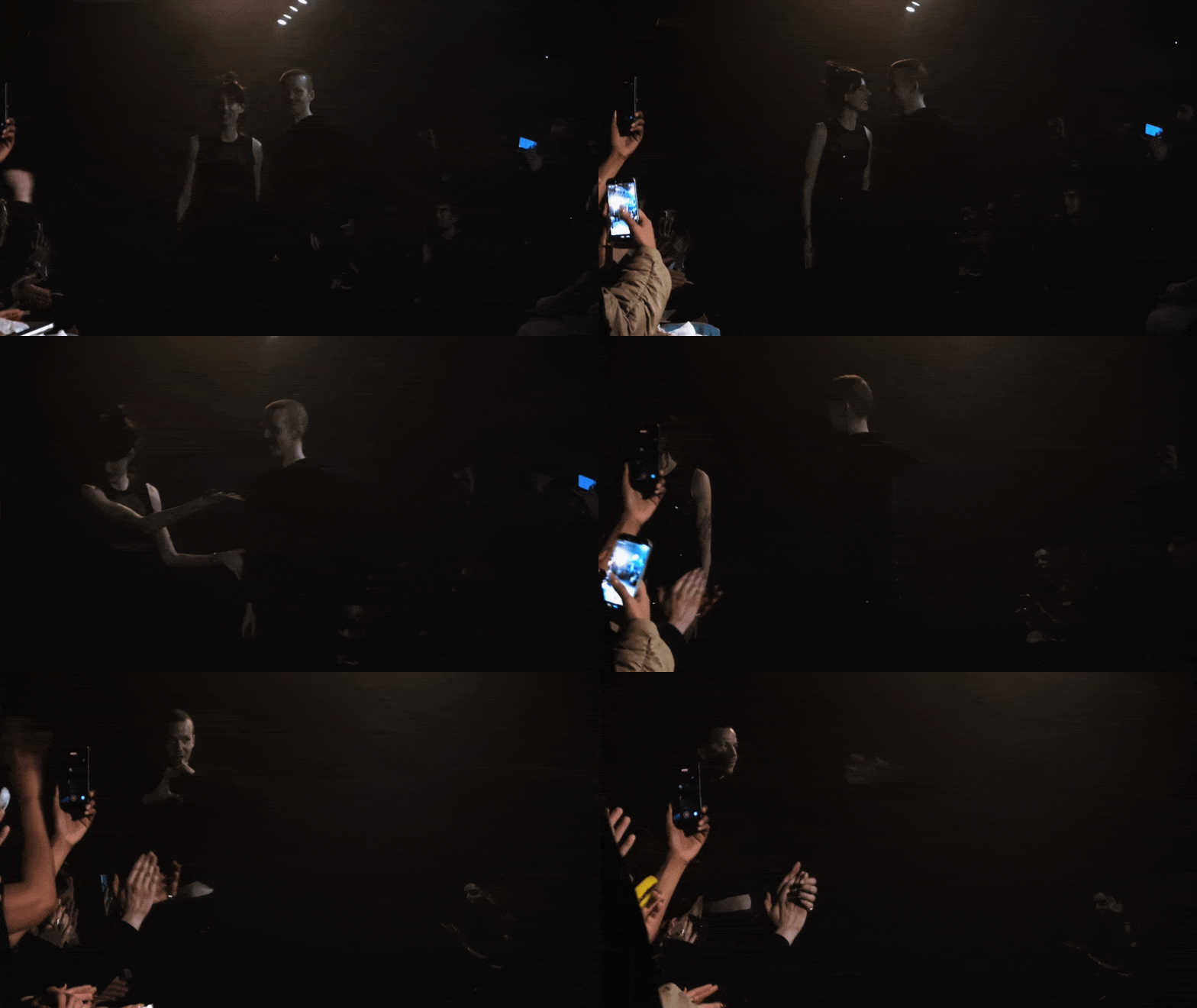
Brooklyn based designer Andrew Curwen received high praise for his previous showing, which translated mythical archetypes into slashed suiting and corsetry. This season built upon his storytelling ethos with a particular attention to intimacy, tension, and darkness.
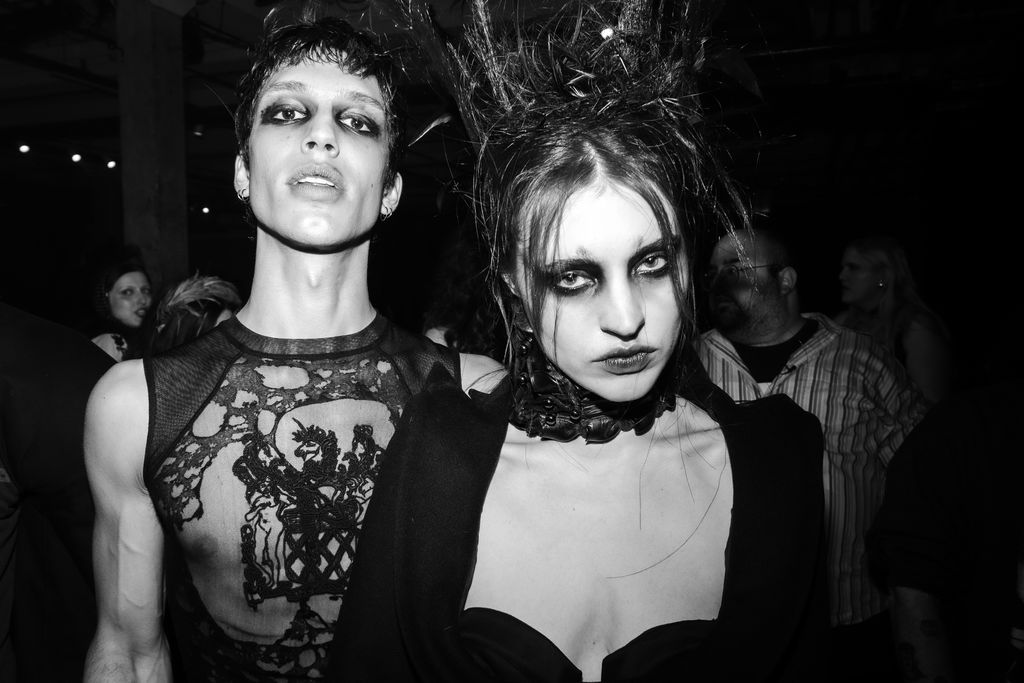
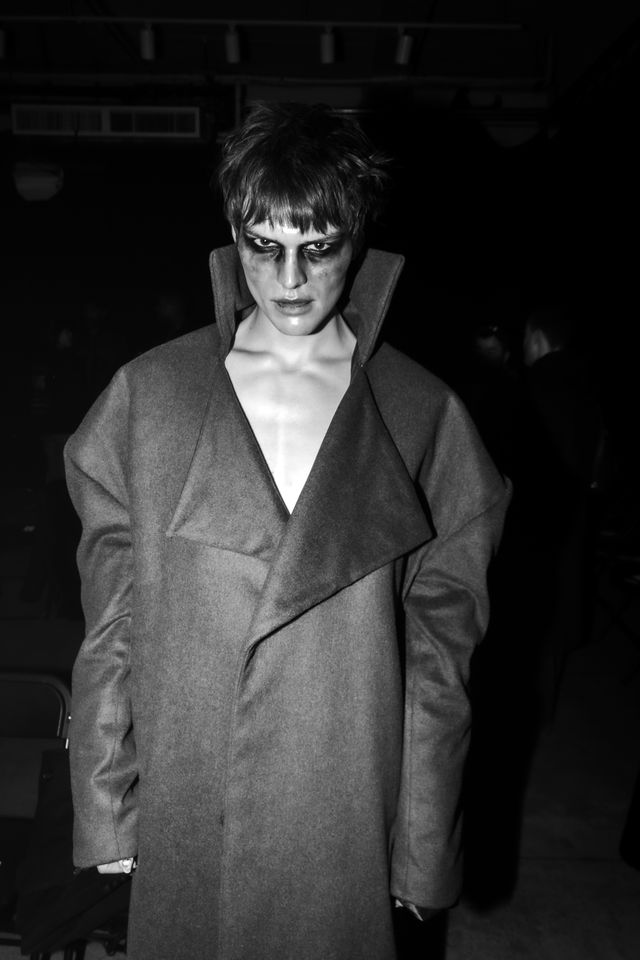
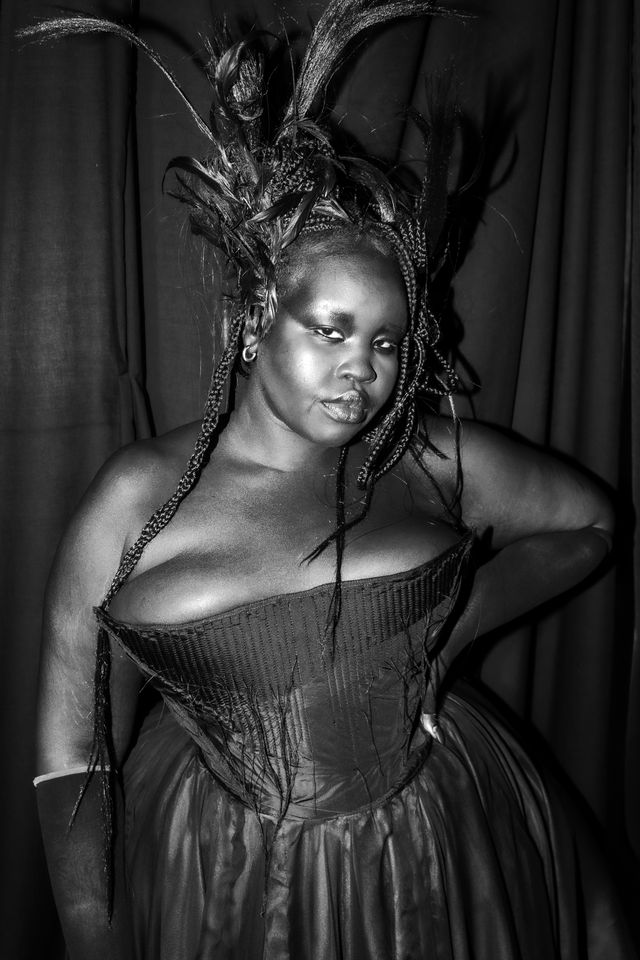
The nearly colorless palette allowed Curwen’s tailoring chops to take front row. Plumed bodices, horsehair crinolines, and bustle backed gowns reinterpreted nineteenth century silhouettes in tiers of jet black frill. Basque waist bustiers and authentic Victorian appliqués brought historical context to recognizably modern iterations of evening glam. It is in Curwen’s first principles to factor material narrative into his work; backstage, he describes using a salt treatment on the shoes to give the leather a worn-in, historied feel.
“I love the idea of giving it life. I really dislike the fragility of newness.”


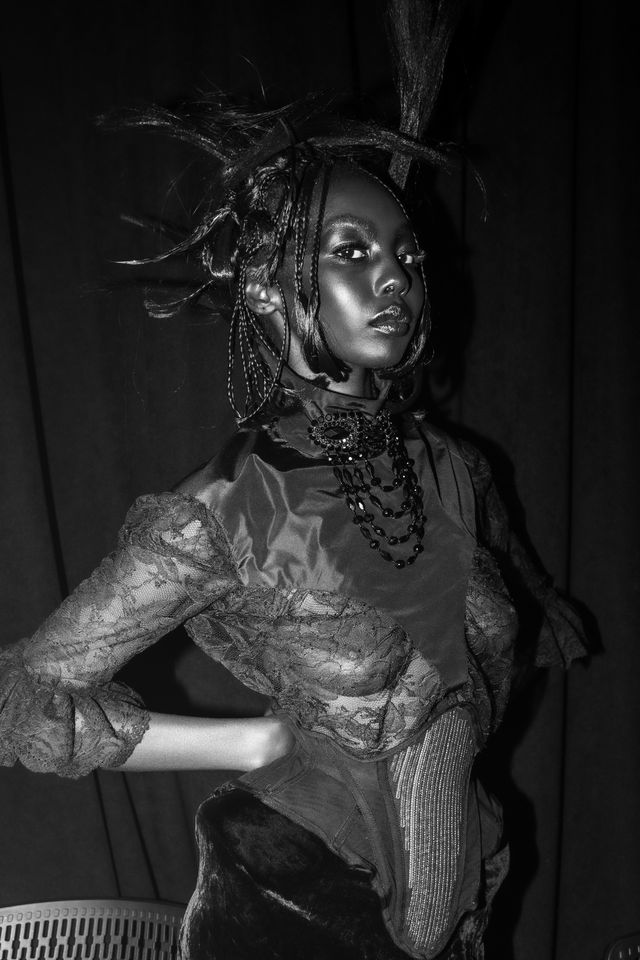
With the algorithm driving much of American fashion, a sort of stylistic pluralism has emerged in which there is no one “look” definitive of mass culture. Curwen, however, presents with refreshing coherence. Craftsmanship drives. His sharp angled blazers, bespoke tail coats, and deconstructed corsetry reflect a formalist approach to patternmaking - one likely picked up from his time working with fellow sartorial auteurs Jane Wade and Elena Velez.
“Hugging you and not being able to find your waist is crazy.”

There are breathless bustiers and stacked leather collars. This is the body disciplined, closely quartered, and exquisitely confined: a loyal translation of classical literature’s gothic setting, where social immobility, rigid expectations, and impossible yearning forge a claustrophobia under the skin.
The looks play into a seductive tension between exposure and restraint. Garments of constriction unravel into shredded silks and gauzy skirting. Padded shoulders are offset by pantlessness, austere cuts are relieved by planes of skin - it is a contrast that recalls the barbed underbelly of the romantic and the alluring fatalism of decay. It is frilled but never fragile, haunted, binding, poisoned lace.
This erotics of friction is inspired in part from the controversial postwar picture The Night Porter (1974). Curwen found intrigue in the movie's portrayal of desire “forbidden in a new way” and sought to translate this sense of “unease that didn’t do anything wrong" into an embodied discomfort. Also pulled from film’s mise-en-scene: a shade of midnight green, so deep it appears black.
“I kneel to love, made rite through grim seditions; I yield my will to this, these nocturnal conditions.”

References to the Victorian gothic cast a thematic overture upon the entire production. An altar of inky ephemera crowns the center of the runway, resembling a vanitas-esque still life. There are cracked mirrors, singed candles, and jars of the designer’s own hair. Where Curwen excels is attention to the details. In place of traditional shownotes, he has written an English sonnet.
Critics often cite ‘worldbuilding’ as a characteristic of fashion’s greats. The narrative quality of Curwen’s presentation invokes the likes of Mcqueen, Gaultier, Galliano: designers whose visions were singular enough to construct both clothing and fantasy. Whether this level of aesthetic indulgence generates profit is another story. But Curwen is smart to include a blend of practical separates alongside his more lyrical costuming. Trousers, jackets, and cumberbunds ground the fantasy in a realism that fulfills Curwen’s professed intention: to design for posterity.
For any emerging designer, a slot on the CFDA calendar is career changing. In Andrew Curwen’s case, it is also indicative of a tonal shift away from the slicked-back minimalism that’s defined New York’s household labels for decades. The industry’s increased embrace of arthouse designers reflects a changing attitude towards dress – and a consumer market starved for a sense of humanness, for escapism, for clothing with some grit.
Halfway through the show, a model lets out a bloodcurdling scream. Whether a gesture of catharsis or a midnight wakeup call, it demands our attention. Andrew Curwen is brewing some true sorcery: watch this space.