DESTROYING TO SELF SOOTHE
By Tyler Heathcock
01.03.26
One ninety-two. The white light of the bathroom washed over me, and the air touched me in ways I could not have imagined. I stood there and waited. Sterile. Naked. On display. One ninety-two.
2025 was the first year I’ve weighed under 200 lbs in twenty years. And I felt nothing. There was a period of time in my adolescence this would have been my dreams finally coming true. There was also a time I would tear my body to shreds with any object sharp enough to assist in my jihad against the flesh, but now I’m staring into the mirror with an indifference that shocks me, and leaving a younger me unfulfilled. I’ve accomplished my years-long goals through sheer will; I’ve choked, starved, and squeezed. A decades-long battle finally over. I’ve lost the weight, but where does self-loathing end and compassion begin? Will I ever allow myself forgiveness for this one-sided war?
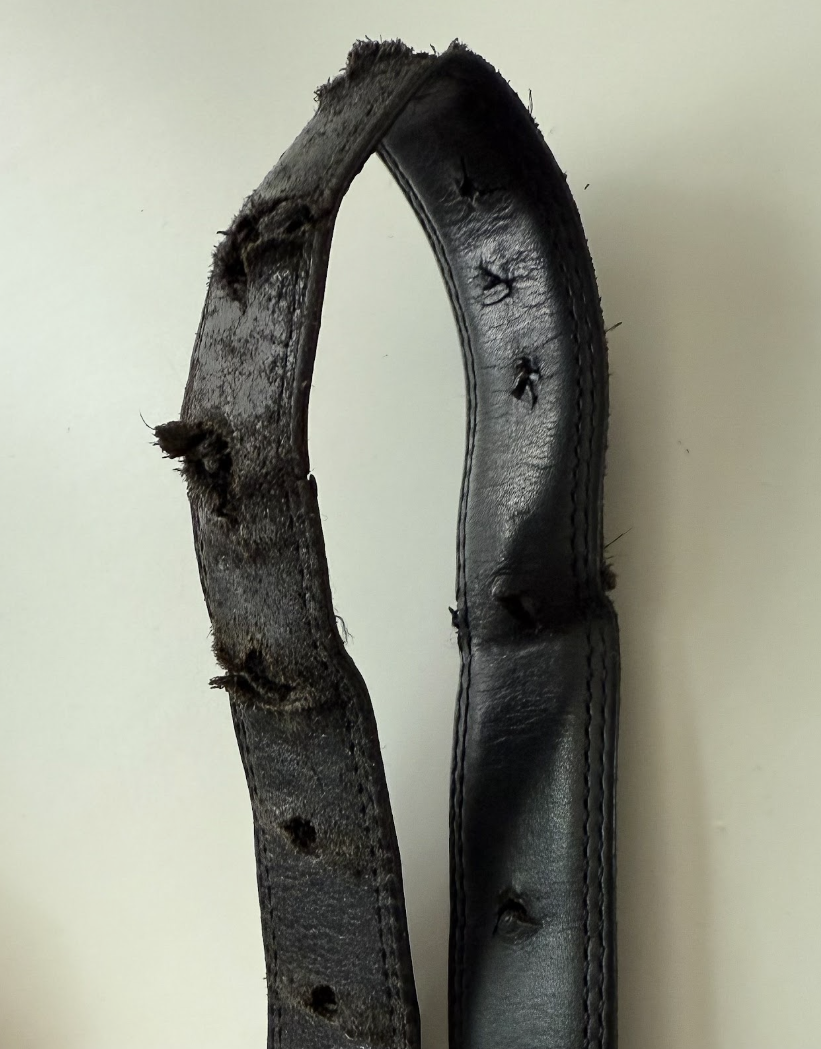
From September 2024 to September 2025, I’ve lost six inches off my waist—half an inch per month. My body now feels unrecognizable to me and often to others, too. My belt cinches tighter and tighter, resulting in new notches to be carved in by knife on multiple occasions. I’ve also taken on altering existing clothing to fit my new form, cropping and tightening. I still do a double-take when I catch my reflection in passing: the way my collarbones now protrude, hips clearly visible for the first time, the way my jeans no longer cling. I am trying so hard to reconcile the new image I see with the person I remember being.
I’ve achieved the changes I once dreamt of, but I’m often left feeling inadequate—so now what? I don’t feel whole. A stranger. There seems to be a delay, my emotions lagging behind the physical change. My body has shrunk rapidly, but my mind clings to long-held self-perceptions—narratives calcified over years of living in a different vessel.
Compliments now feel surreal, as if directed at someone else; those who don’t often see me are left stunned by my transformation. Congratulations are in order—praise coming in the highest forms. A man’s body is his only currency. With mine feeling inflated. Why does it feel like it wasn’t valuable before? Even in the moments when I should feel pride, there’s a lingering sense of fraudulence, of impostorhood. I keep asking myself, “Why am I deserving?”
There remains a persistent misalignment between the person I appear to be and the person I internally know. My mind hasn’t shed its past as easily as my body shed its size. I feel as though I’m being haunted by my past self, and those around me are not letting me forget.
These feelings have led me into new and unusual rituals. Some nights, I drag myself out of bed to do push-ups. To do sit-ups. Squats. Not in pursuit of a new goal, but out of compulsion to feel my muscles contract and expand, to exhaust my body in the hope that it might quiet my mind. The line between discipline and self-punishment has blurred. These exertions are not motivated by growth so much as control, offering a fleeting sense of sovereignty. Pain is predictable, and fitness becomes less about health and more about penance—earning rest, earning peace, earning the right to exist in this new body through suffering.
On this journey, I’ve learned that there is a subtle but potent difference between transformation and embodiment. One visible, the latter lived. Embodiment is my essence, a reclamation of presence. Recognizing my reflection not just as an image but as me. Without this connection, even my most dramatic and sought-after change has left me feeling hollow.
Over the past few months, I’ve come to understand that forgiveness and grace isn’t found in a measurement or in an idealized change finally fulfilled but in the uncomfortable practice of re-inhabiting myself. Approaching my body as something to be understood rather than adjudicated. It’s an evolving, everyday challenge: learning to live within what I’ve built—not merely beside it.