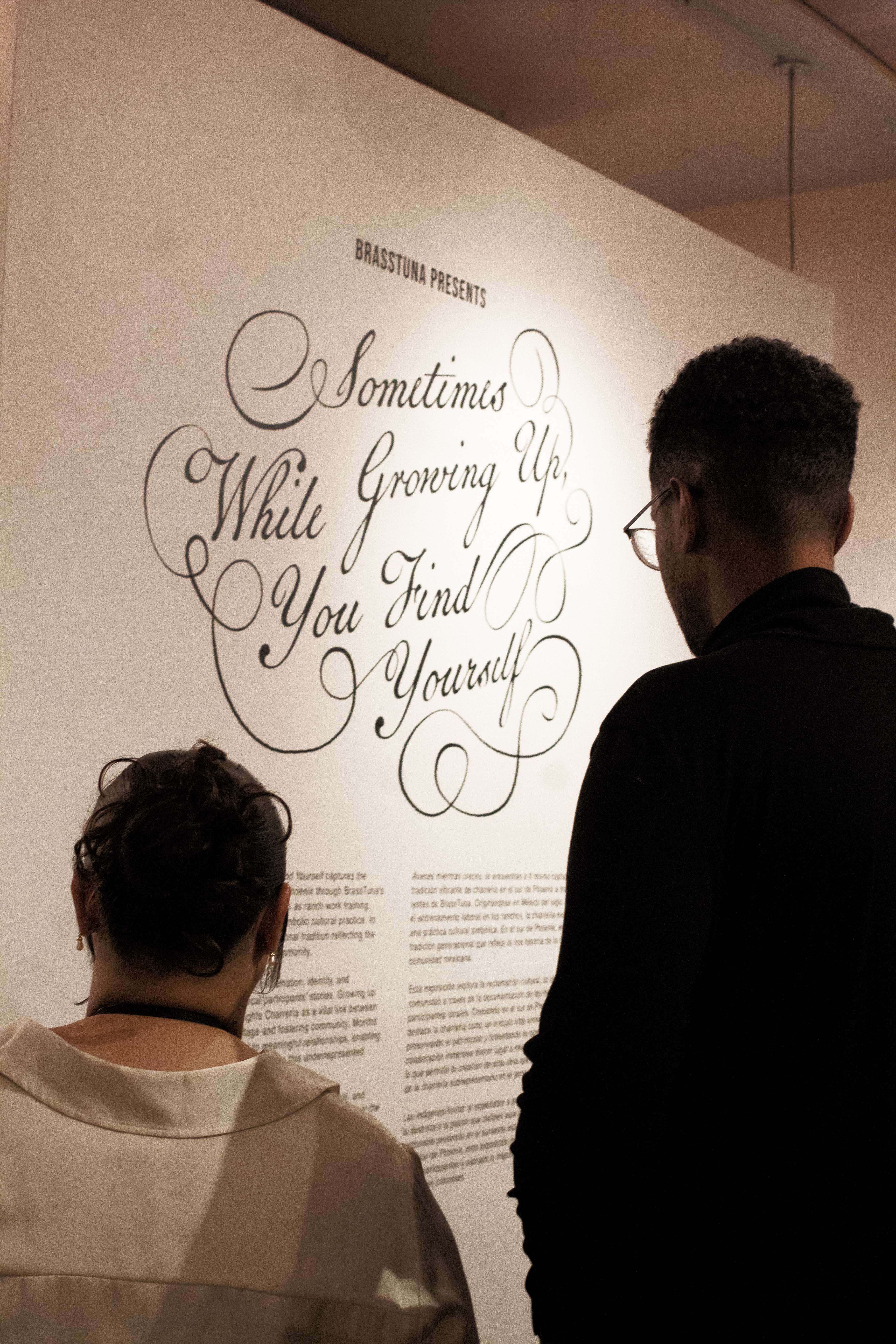
Sometimes While Growing Up, You Find Yourself
Interview with visual aritst Brass Tuna (Adam Corona) and Jorge Emiliano Rodriguez
Interview and Photos by Anitah Imani
02.23.26
A woman sitting on top of her horse is occupying space in the middle of a lush open field in South Phoenix. Her grand Adelita dress gently drapes over her horse's body, as she darts her gaze through her tall brimmed cap towards the viewer. The silhouetted city buildings of Phoenix linger behind her, but her regal presence in this desert landscape suggests she’s been here far longer than the environment surrounding her.
To those who participate in the charreria, it’s not just a sport, but a way of life. Artist BrassTuna (Adam Corona) knows this truth intimately well, as he grew up in a family who participated in the sport in South Phoenix - and owns the largest Mexican rodeo grounds in Arizona, Corona Ranch. Charrería, Mexico’s national sport demonstrates horsemanship, showmanship and tradition, all of which are innately significant to Mexican cultural heritage. After taking some time apart from the community, Corona returned with his cameras to capture his love letter to the sport and community he was raised in.
“Sometimes While Growing Up, You Find Yourself” is Corona’s visual documentary project that paints a new perspective on charrería. We sat down with Corona and project manager and cousin, Jorge Emiliano Rodriguez (Nano), in South Phoenix to reflect on the process of producing over 500 images for this body of work, and what was learned from this journey of returning to cultural roots.

Anitah: First off, I’m interested in hearing how the day of the show went for you. I read that this show took about nine months of just producing it, but I'm sure even a lot sooner just conceptualizing it. I also read that you had your team together even before the funding was even a part of the question. So before we even get into all of that, I just want you to reflect on the moment of the show. Was it everything that you had imagined?
Brass Tuna: I would say it was exactly what I imagined it to be. My team members can definitely vouch for this. I was such a stickler for every detail, every “I” needed to be dotted, and I think it really paid off in the end. The opening was definitely what I wanted it to be and more. Being able to be in a room full of all the people that I love and all the people that love art, and all the people that are willing and wanting to learn about something that they did not know existed - I couldn't ask for anything more. So yeah, the show went exactly how I wanted it in my head over a year ago when we started.
Nano: I would say that it was so overwhelmingly everything - overwhelmingly positive, overwhelmingly beautiful. The sense of relief knowing that we really executed something that was above all honest, clear, and sincere is something that I’m still struggling to articulate. This topic that Adam chose to cover, to some, might be a beautiful culture, and while it is beautiful, it is so much more. It is a way of life. It is who they are, who they identify as, and how they honor their history. So to have this show center that, with the cornerstone being unmitigated honesty and respect, was just overwhelming, and I couldn't have asked for anything better than that.
A: It was such a beautiful reception.

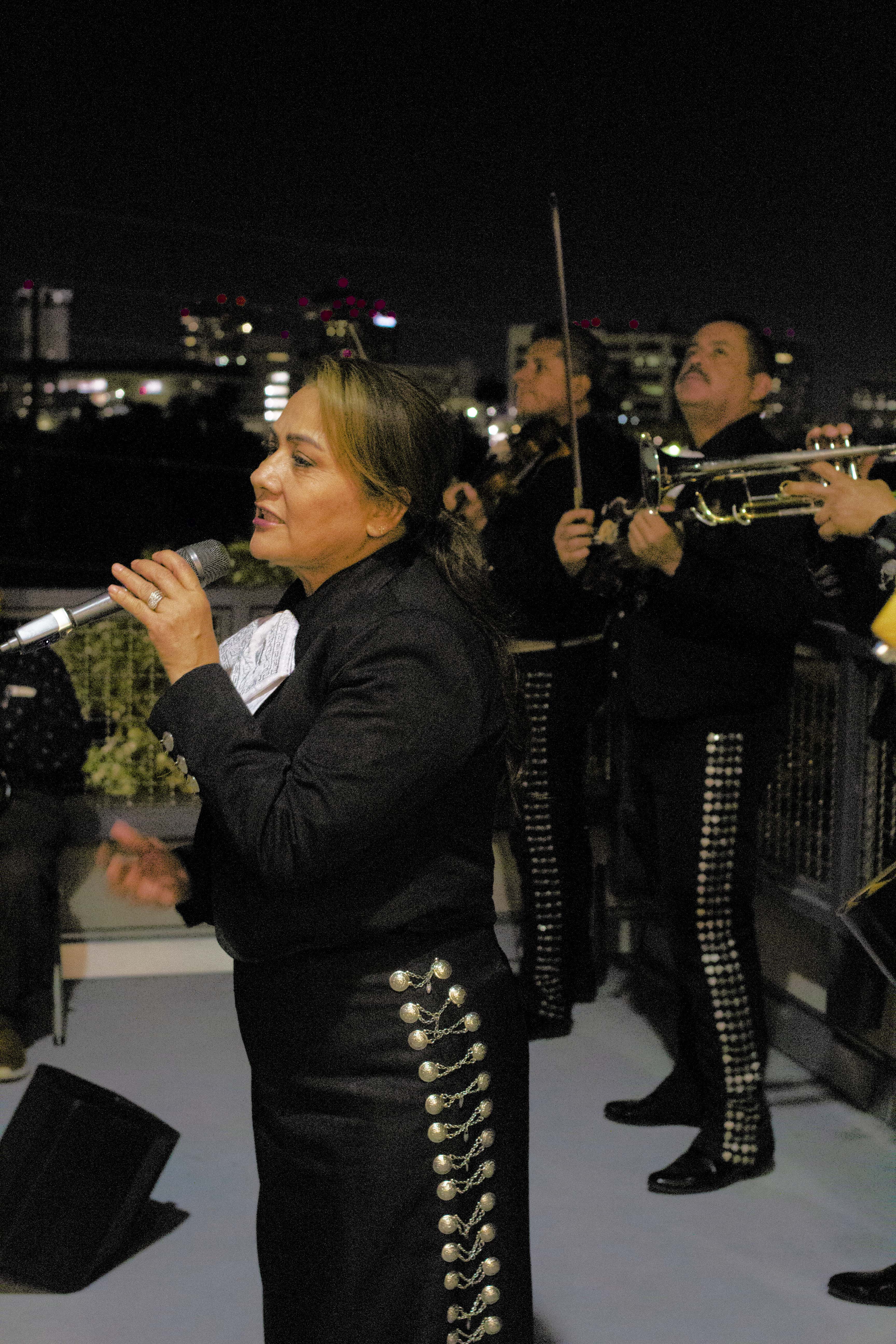
BT: You came at the good hour. I saw you when you were there, and I saw you when you were outside watching the mariachi. That was the perfect hour to be there. It was hot as hell in there, but that was the best hour to be there.
A: Seriously, it was such a beautiful experience. I want to ask both of you, what was your favorite part of the installation? You had prints on the wall, of course that was the centerpiece of the show. You had the fashion presentation in the middle. You also had a couple different print setups as well, in the room where the documentary was being screened with the 400 prints, you also had mariachi.
BT: It's so hard to pick one in specific, because I feel like they all represent the project in a different way. And without one, it would not have been complete. I think if I have to choose one installation or piece of work that's in the show that was my favorite, it's probably the documentary. You can easily look at these images, and you can think that they're beautiful and whatever about it, and that's great. And I love that people come to shows and they form their own opinions, but being able to hear the voices from the same people that you see in the images, I think that is something that is really rare to see in exhibitions. I think a lot of times artists, not just photographers, but artists in general, will capture their subject the way in which they want to interpret them based on the information that has been given to them. But that's not always the exact reflection of how that person is.
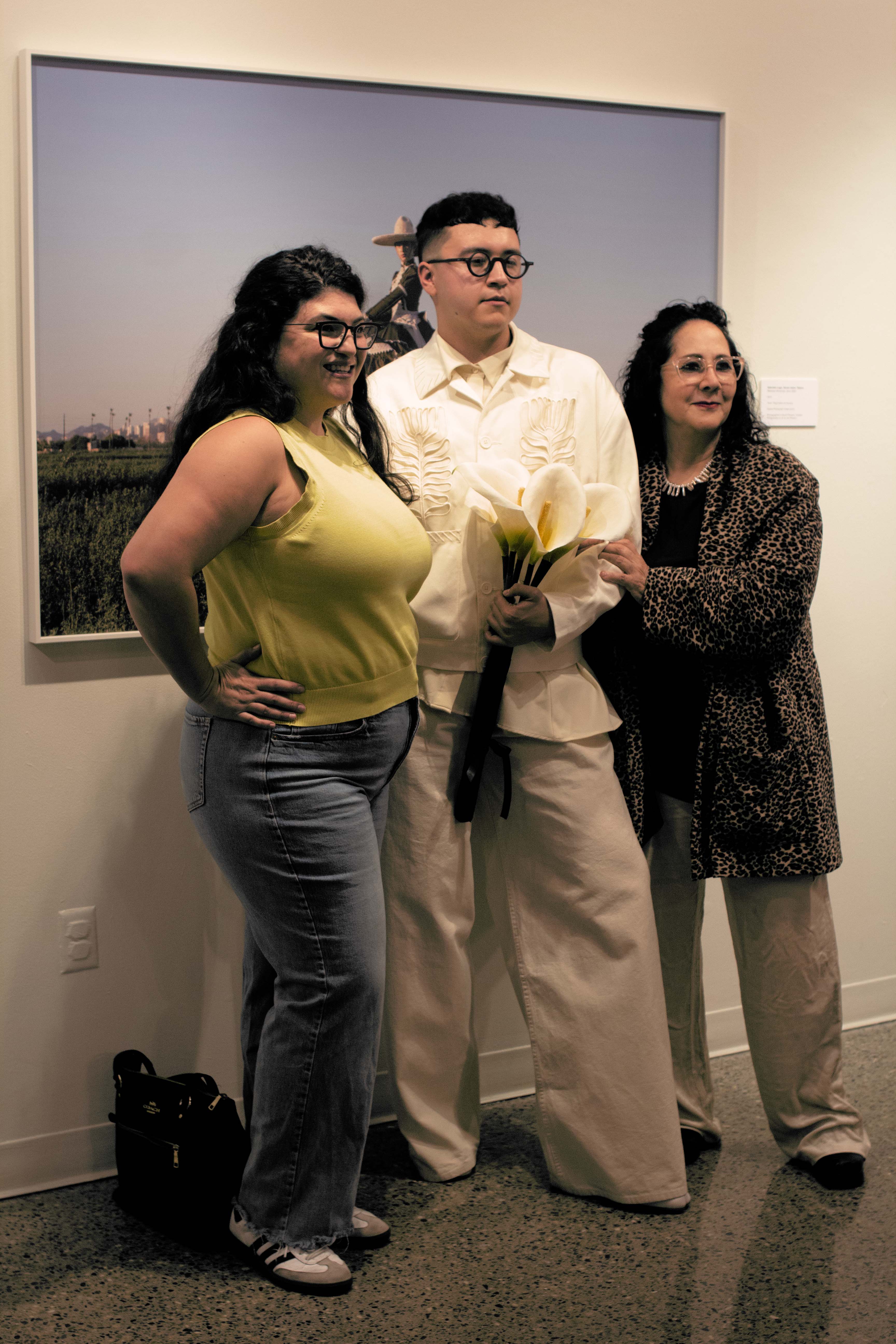
A: It's impossible to just capture the depth of someone in just one photo.
BT: Exactly, there's always a story to tell, and even the documentary - each participant could have had a year-long documentary made but being able to hear their voices in that space is, to me, the most important part of that entire exhibition.
N: When you first asked that question, I think Adam said it best. Everything is dependent on one another to really bring the vision to life, and to communicate that language to life. My immediate thought, which is a little abstract, was the fragrance that was created. And it's because that fragrance is extremely unique to charreria. In the second suerte, which is the second event, piales, it requires lassoing a horse. Part of the technique requires the rope being quickly wrapped around the head of a saddle, quickly tightened, and thus a plume of smoke develops. It's a very, very distinguishable fragrance - coming from a specific type of wood called ocote that is used in the saddle head. It's something so iconic and so specifically unique, it really encapsulates charrería in one note. And to walk in there and smell something you would only smell in that instance, was truly remarkable.
That being said, the documentary is my favorite part, because anyone can have their own takeaway from an image, but when you are presented with substance and really, a point of view that is one of the participants, it really invites one to a more realized perspective.
A: Yeah, absolutely. The images you produced were so strong that you can lead into a narrative with that alone, with some of the context that you gave, and just the visuals of the show, but adding that extra layer and being so intentional and being so thorough as to add a full documentary as a part of the project is really special, really rare.
I also wanted to touch on inviting photographers to the show. And of course, you have such a rich history of photography in your own work, and I actually brought my print today, because I did bring my camera to the show. This was the print that I was able to get. This is my favorite one. We'll talk about her in a minute. But what led you into intentionally extending that offering to photographers.
BT: I knew with this show in specific I wanted to try my best to reach all aspects of the community. I did not want this to be something where it was only the people who work at the museum with me, or are influenced by the museum, to witness this body of work. I wanted it to be everybody. So I did a lot of community outreach to try and get high schools to come and see the work - just other people who wouldn't be exposed to it. When it came to photographers, I knew, based on other photography shows that I've been to in Phoenix, that feeling of being surrounded by people who do work in the same medium as you. It's just the best because you all know what went into making what you're seeing.
And so I was like, I don't really know too many photographers, but I know that there's a lot here. It was just really important to me to try my best to invite photographers. I'm a photographer, I've had to come to terms with that, so I'm gonna invite the photographers to come, and y'all pull up and witness this body of work with me. I knew if I gave an incentive like a free gift, I would maybe get some photographers to come, and then they would see the work and be able to relate to it, because they know what it takes in order to do that.
A: Oh, absolutely. I can say as a photographer coming to the show, I know that feeling that you're talking about. Then you learn about all the context behind and then it's like, wow.
BT: Exactly, it’s like the worm on the hook was me being like, here’s a free gift. And then you guys come, and then now we're actually all having fun and learning.
A: Did you have any hand in that decision as a project manager Nano, or were you just more so in support of it?
N: I had no idea! But I was very much in support. I just thought it was so Adam, very much in his style. And not just a way to bring people and awareness to the show, but also to really include the community.

A: So we're gonna pivot now that we touched on that, and I kind of want to reel it back to the beginning. Of course, the show was produced because of the cultural significance that your family has to the sport of the charrería. But I want to understand a little bit more about the importance that has to both of you individually. You said that your grandparents own Corona Ranch, which is the largest Mexican rodeo grounds in Arizona.
BT: It's literally right there, those trees right there. Which is why this land of South Phoenix is so important.
A: I know you mentioned in one interview beforehand that returning back to the community that you were once a part of, was something extremely foundational to this whole project. You also mentioned that you took a break in this community and came back to it, right? So I want to just hear about your journey as being a part of this community and the sport, and specifically where were you in that gap, and what made you want to come back?
BT: That's a big question. I know with Nano and I, I would say there are a lot of similarities when it comes to our background in the sport, but there's also a very big difference between them.
For me growing up, I was surrounded by it, I'm still surrounded by it. I live with my parents, and growing up in this culture is something that’s in your house every day, no matter what. You walk down the hallway and there's saddles there on a rack, or I remember growing up, I would hear my dad walk through the house at like 1am with his spurs, and everyone's asleep, and he's barely getting home from a Charreada. And we're like, he's gonna yell at one of us to take his damn boot off. But growing up, I didn't speak fluent Spanish, so that already was my first big disconnect. And I told a lot of high school groups that would come in on these tours, that language is the first border that you have to cross in order to fully understand a culture. And I think for being Mexican and Mexican American, it's already a gray space that we live in, of like, we're not American enough, and then we go to Mexico, we're not Mexican enough. And then on top of that, you don't speak the language, so it's like, damn, you're really none of this. So that was the first reason why I left.
I wouldn't say that I fully ever joined. I only ever rode when I was a kid with my dad, and then immediately I felt those identity issues begin. Going to an all white school, you know, going to a religious school, it's gonna do it, you know? People are going to put all of these ideas on to you of who you are and how it is that you're allowed to identify. So I think from a very young age, I knew that I was not fully this. So I was like, I'd rather just not be a part of it at all. I'm just going to explore other aspects of my identity, and that's when I would say I began working on art. That was my way of fully expressing myself. And throughout the years, especially in high school, I feel like that's when I started to learn who I was. Going to a public high school - specifically being surrounded by people who came from households where their parents did not speak English, they only spoke Spanish - I think that really started to push the pedal to make me understand my identity.
And then as I grew up even more and in college, that's when it really took full throttle, and I was like, all these years of me suppressing my identity and telling myself you're not Mexican, because other people told you that, that is so pathetic that I let anybody tell me who I was. And I distanced myself, Nano knows, I would distance myself from our family so heavily, because I just felt so much shame, and I would not go to family events. Before we really started this project, I remember going to a Charreada at my grandparents' ranch, and I don't remember who exactly it was, but I think it was one of my nieces, and she did not recognize me. It was just such an interesting feeling. It's like I was building this tower out of glass, and it was put on the faultiest foundation, and then it all came crashing down. And in order for me to reconfigure and find myself truly, I needed to work on this specific project.
A: Going to all white high school, that'll do it to you, been there for sure.
BT: I think developing my art practice during that time period was really like, if it wasn't for that, I'd probably, I don't even know where I'd be. But I think because I did that and I focused on photography, I focused on all these other art forms. I was able to come back and bring all those skills that I had learned, and now relearn this and share everything new that I had learned, but with everyone.
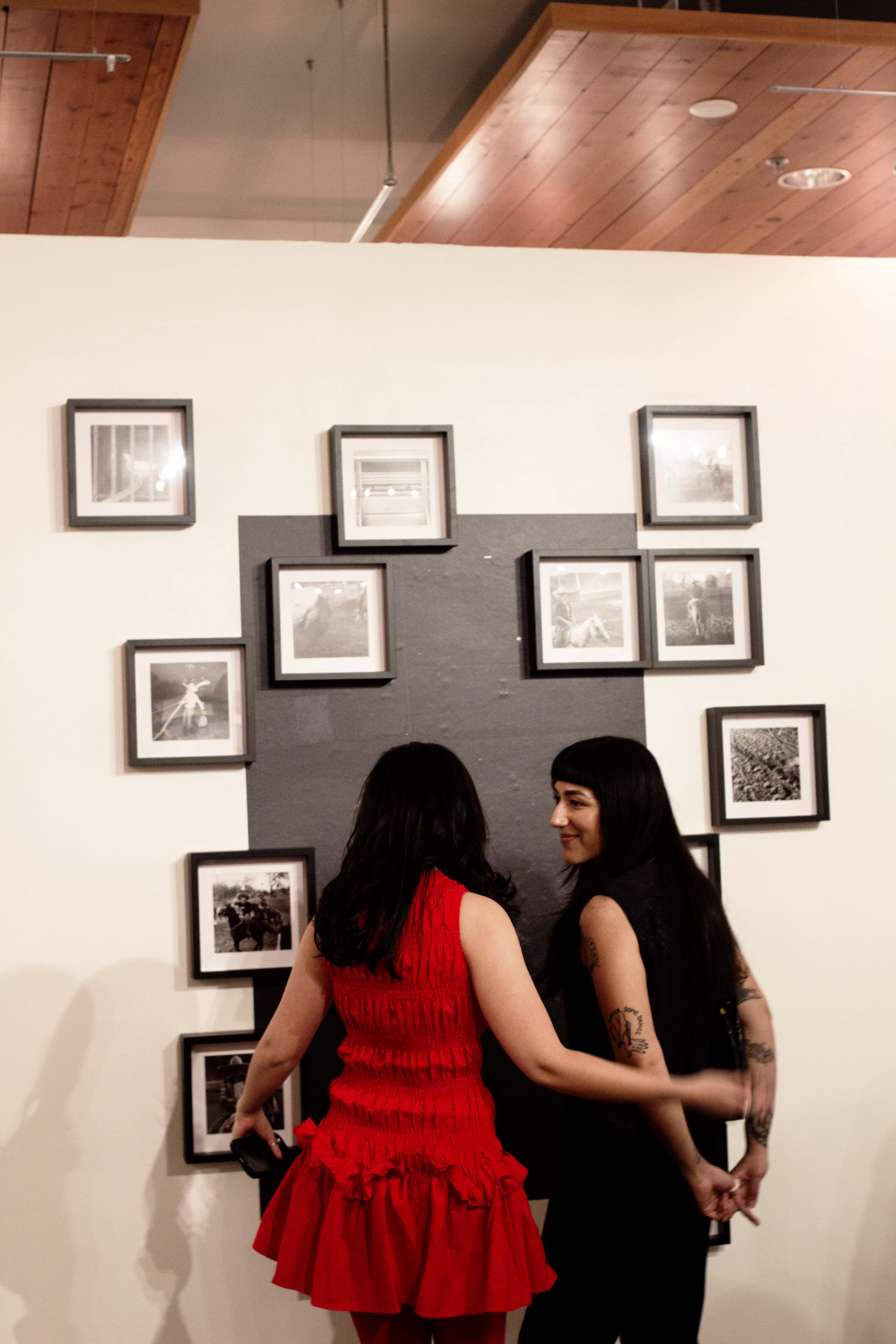
A: It's a beautiful full circle moment to come back to it. And you Nano, what is your relationship with charrería?
N: So my relationship to the sport is such that I participated in charrería from birth. I come from a lineage of Charros & Charras. I was born into this lifestyle and it's like my destiny was decided for me, even before I was brought into this world. At 18 years old, that's when I stopped, or really when I finally found my voice to say “no, I don't want to do this anymore”. Let me preface by saying, like with any professional sport, unless you're in the top .001%, you're not making any money. It's a sport of luxury, a sport of fun. Not to say that everyone who participates in this sport has a lot of money. In fact, there are many people who don't come from wealth, who still find the means to ride. People work their entire lives to be able to afford to do this, whereas, I was forced to do it. But I grew up in this sport, and it's not just a sport, but it is a way of life and a way of existing. Charrería and its elements permeate every single facet of your life, and it's because it’s our living history, it’s who we are.
That being said, and to echo Adam again, going to an all white high school and growing up in this American system with such Hispanic roots, you lose a lot of that culture and identity. And I can attest to that. Whereas perhaps Adam felt that he wasn't Mexican enough, and so he shied away from it at times, I felt like I was too Mexican. And not that I shied away from being who I was, but I definitely minimized the parts of me that were Mexican, and so I lost (or forfeited) a lot of my Mexican identity.
So many years later, at 31, I can reflect and say that I am beyond grateful to have participated in charrería. I am so proud of my heritage, of having this knowledge, and of being a part of this beautiful sport. But beautiful as charrería is, what it means to be a “Charro” is something that I have always struggled to come to terms with.
To be a Charro is more than dressing out and participating in the sport. It requires the full embodiment of a hyper-masculine/hyper-macho person. Being a charro means being a man’s man. It means being tough, and never showing your feelings. It means denying so many things that I identified with as a child, and still do to this day. The overwhelming feelings of confusion and acceptance continue. Not knowing how to act, not knowing if I can actually be myself without judgment is exhausting. There also was the expectation of following in my fathers footsteps. Following the life of someone so respected and admired by so many people can be daunting for anyone, especially when you’re a little queer boy who likes to sing and dance to Hillary Duff’s Metamorphosis album on repeat.
I think with that machismo complex at the forefront, it creates barriers and spaces for those who perhaps are not of that mindset. I speak to myself because I'm a gay man, and so growing up in this sport, it was so impossible for me to feel welcomed and accepted, not because I faced any deliberate homophobia, but because I understood the language that these men would speak. I quickly realized that I was the insult that would be hurled to one another. I know these problems exist. I’ve seen it my whole life. It's not to speak ill of Charros, but unfortunately it is a part of the culture. And well, how is one to exist comfortably in an environment that is not made for those like me?
A: It's like a symptom of it.
N: Correct, and I hated it. I hated riding growing up. It was the bane of my existence. But at the same time, it allowed me to mask myself. I learned very well how to exist in cis gender male dominated spaces as a “passing” cis straight man. And so I distanced myself from the culture. Not just because of my sexual identity, but also because I didn’t want to keep pretending I was someone I wasn’t
But after all of these years later, to come back to the sport that raised me in a really beautiful way is so important. And to show people what it actually is. I know I keep mentioning that it's more than just a sport, because it is. The most important thing to drive home is that, it is a way of life, it is a way of existing. And to dress as a Charro is to dress as Mexico, it is to be Mexico. And coming back to this project, it reignited a lot of those sentiments. Charrerita taught me what my roots actually are, who we actually are, and where we come from. That's just been the most gratifying and beautiful part of this project.
A: What a beautiful gateway into this way of life I'm sure that you've given a lot of people in Phoenix as well. Both of you, bringing your joint perspectives, both personal and different, but very similar in some ways, and presenting that lens on the culture.
So tell me a little bit about what went into curating the team for this project. Obviously you have your family a part of it, and you have some other people part of it too. I just want to know what went into curating the team to help you produce this show. And as I mentioned earlier, I understand that you had this team selected before even funding.
BT: I had a lot of inspiration, and the inspiration came from the museum. I think that if I didn't work at the museum for so long, the foundation for this project and the framework for it would not have been what it was. I knew if I wanted to represent us on this level, on a level like the museum, because I have never seen an exhibition of us at the museum. I have never seen this iconography at the museum. I've seen Western, but I've never seen this. If I knew I wanted to bring us into that space, and I wanted people to visualize us like we can exist in this space, I knew that I needed a team to help me produce this. I needed a team of individuals who were going to be dedicated to this. And so I thought - I've seen the plaques at the museum: What specific roles do they have listed for things like this? And so I knew I needed a project manager, because I was not a part of this community fully like my dad is, my cousins and other family members are, but I'm not. So I knew I needed someone who could help me contact community members to work with and authentically.
I knew I needed an exhibition manager. I don't know how to render a room on my computer. I don't know how to send things to get printed on vinyl, I don't know all of these little things. I knew I needed at least two writers, one who was fluent in Spanish, because everything needed to be translated. And someone who was good with their words, who was able to fully realize these ideas. Both the ones where I'm just giving you a thought in my head, and now you have to interpret it, or the ones where I have a bullet list for everything. And then I knew I needed a preparator, someone who could build the things that I was wanting. So immediately, my mind went to the five people who were on the project and are a part of the team. And I knew two months before the grant was open that it was going to open. I had gotten confirmation, so I was like, okay, they're gonna do this again, and I have this idea, and I think it's pretty strong, so let me see if I can get the team together first, and then we can start working on it.
That's how it came to be, and immediately, my teammates, they were the first people who came into my head, and all of them agreed to it even before I got the funding, even before I applied for the grant, everyone was like, “Okay, I'm down but let's - let's focus on getting the money first.” And then once we got the funding, it was a year ago, on November 7, and I was in Japan, and I got an email letting me know that I got the funding. And immediately I was like, “All right, it's go time. Everybody, as soon as I touch down in the United States, we are getting to work on this. “ And if I didn't have them before that, I would have been so flustered, because immediately, when I got back, we started setting up the framework for how everything was going to go.
A: Wow, that's so special that you were able to put your team together within your family. I want to talk about just the process of working together. Nano, what did you learn from this whole experience? Working one on one with Adam, and also just speaking more to your role, just reflecting on that experience and what has it taught you? And maybe a standout moment of the project, a standout memory of this whole shooting.
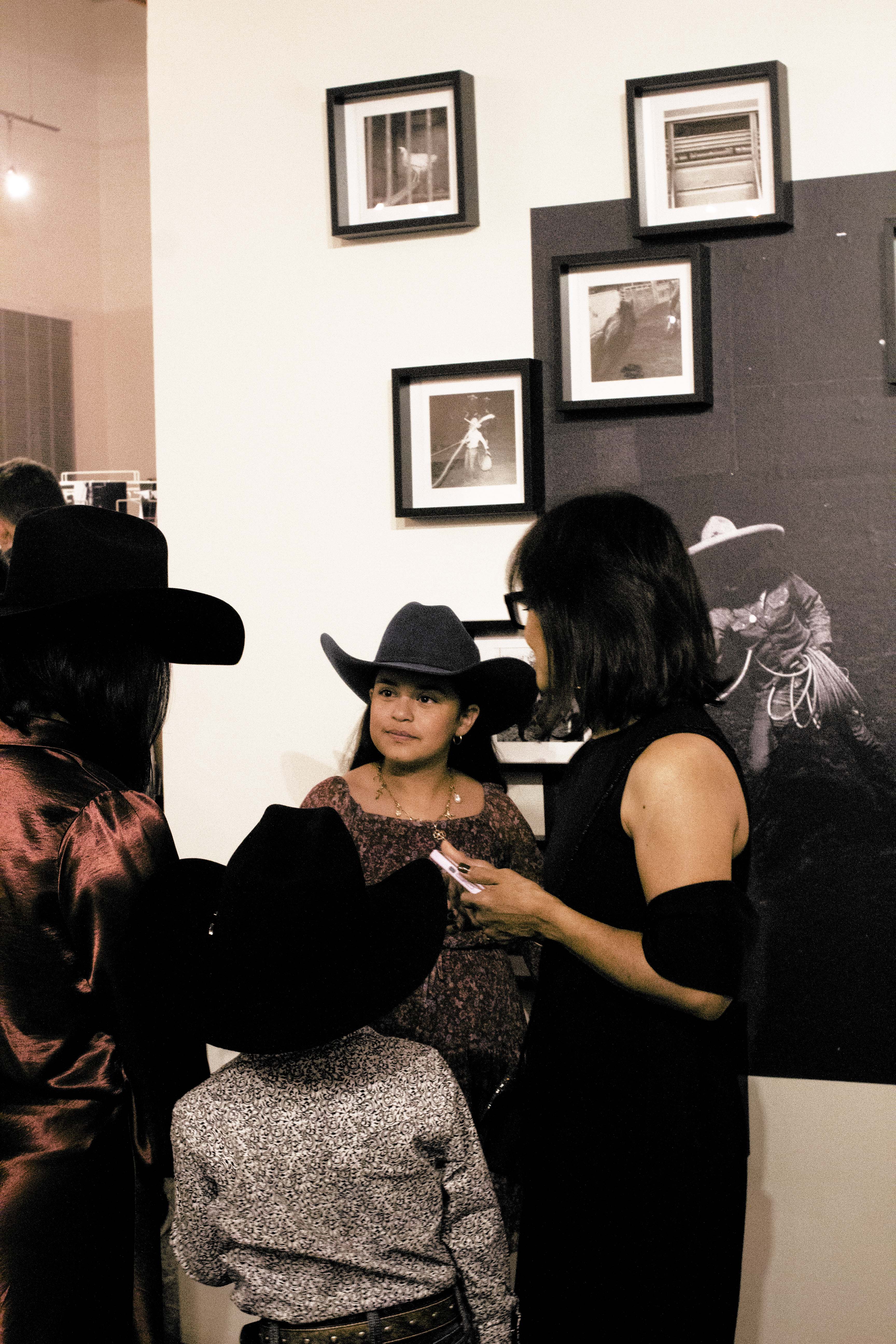
N: I knew going into this that we were going to be in great hands. I know I've said this before, multiple times, but one of the things that I appreciate the most is how he centers respect and fully shows something the way it's intended to be seen. So when he approached me with his idea, I immediately knew that I wanted to be a part of it. I knew that he could do it in a way that was respectful and correct. Charrería is not in any way new, and while it may not be mainstream whatsoever, I have seen it documented, and I have seen it covered from different angles. More often than not, especially if it's an American publication or an artist who isn't of the background, it's sometimes misconstrued. And maybe sometimes, while the intentions were pure, there are just some small aspects that weren't 100% right. And in order for you to really get that full picture, everything has to be right.
So when we first approached it, it was an immediate yes, and then as soon as we got approved, the first thought was, okay, who will our participants be? And that wasn't the real challenge, I think the most challenging part out of everything was coordinating everyone's schedules. Because this was like a documentary-style piece of work. It really meant following these people over the course of 5-8 months, and that proved to be extremely difficult, but extremely rewarding.
My favorite part of this was the vision of a picture that he wanted. It was very, very specific. And it's the picture of Gaby in the field. I had this secret spot when we were scouting locations. And he was just like,” This is it!” And it really was it. I think this entire journey has been incredible. A lot of changes, a lot of working on the fly, a lot of being able to pivot. Shout out COVID for really giving us that lesson. I think that was put into practice. Working in 110, 112 degree heat. And really shout out to our participants, their scheduling. They just put up with us, but they also had faith and really believed in what we were doing and that shows throughout the work. Not just in the work itself, but the participants, and their willingness to be involved. As Adam said, this wouldn't exist without them. The fact that they were so willing to put so much effort and themselves into this is part of the reason why the work is what it is.

BT: And the fact that they did not know me at all, none of them. I did not know a single one of them before this.
A: So how did you find them? Was it through family connections?
BT: So Nano found most of them. Everyone on the team had a specific role, and then we quickly figured out that everyone had to wear 10 different hats. But his initial role was to find the participants, and we started with a handful, and then from working with the teams that we were working with, we found the remaining participants. So I would say I know 5 of the eight participants are ones that we were not originally working with. And then it was from those, the initial ones, and Nano did a great job of finding them, that we then found the other ones. And it was great, for example, Diego, the one who was on top of the trailer jumping, joined the project a little bit later. I had came here to a practice, and I brought two of my teammates, and he came up to us while he was on his horse, and shook our hands from his horse. And I was like, oh my god, this level of respect that you have for this sport, you have to be on this project. And then I went up to him, and he said yes. Just signed a little contract right there, no questions even asked.
A: What a great image that came out of that interaction.
BT: That was something about all of the images, all of the images were made way after the fact that we then knew these individuals. I would say the only person whose image was made pretty quickly after meeting them was Javi. Nano knew Javi more than me, but Javi showed me kind of who he was, and the respect that he had and the wildness that he had in him, that I was like, your perspective is not on here fully, so I need you a part of it.
His photo was in his room, the room that's right here. And that one was just impromptu. We needed someone in a room setting, and I didn't even see what his room looked like before we took that photo. We walked into his room, and I was like, this is the picture, this is him. So much went into each person's photo. It's like a representation of them based on what they gave me after months of knowing them.

A: I could sit here and ask you about the story behind each photo, but we'd be here for hours. So instead, I'm gonna ask you about the one that I have, and I want you both to share with me a story of your favorite image and what went into creating that.
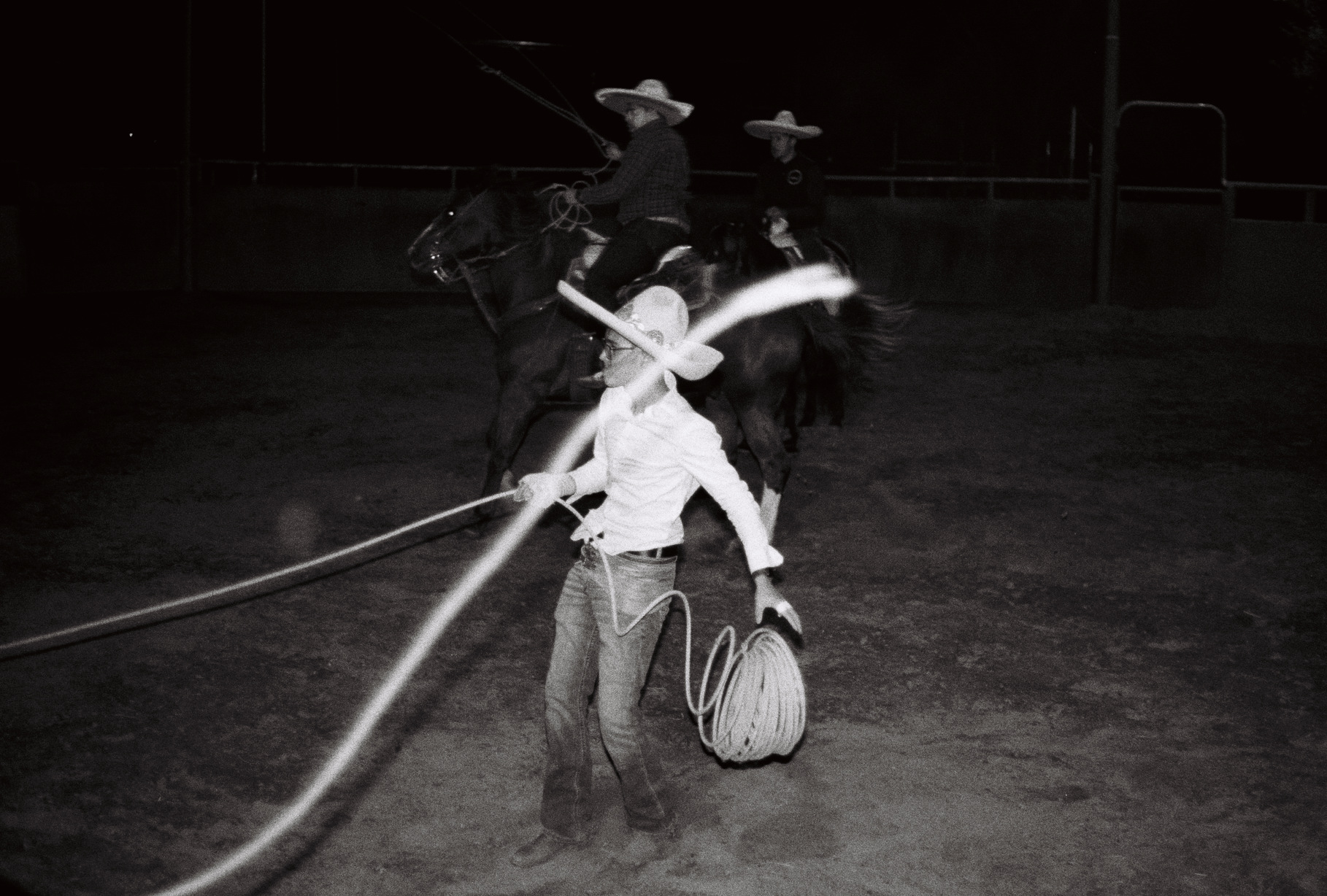
BT: My favorite image from the show is probably one of the 14 on the film wall. Those are hand-printed by yours truly in the dark room. It's the image of Diego, and in the image, you can see the rope in the frame, and he's dropping it. You really have to see the image in order, I can't fully explain it, but to me it captures every aspect of this project. Especially the aspect of the artistic direction behind creating the work, which was don't stress it. I told myself from the beginning, the moment you stress it is the moment that it all falls apart. And his photo, I just showed up to practice, and I had my camera with the flash, my film camera, and took it. And immediately, it's such an action shot, and it really, to me, represents the full project.
N: Tough pick but I'm partial to the picture of Gaby, mainly because the location was somewhere that’s so close to my heart. It's one of my favorite places in South Phoenix, because it's so rare. But next to that one, it's probably Diego jumping on the trailer. When Adam introduced that idea, I thought it was so radical and so left field in such a right way. And it's part of the reason that it is my favorite because that is my father's trailer. And when we shot that, my father was in Mexico at a Charreada at the Millonario. It's a tournament in Mexico and it's a huge, huge deal. But he has cameras in the house, and so he called me right while we're shooting, and he's like, “What the fuck are you guys doing with my trailer? You're gonna break my trailer.”
BT: While we're doing it all sweating, all dying in the heat.
N: Really, the only reaction a father could have. Obviously, there's no context, right? He doesn't know, nor did we ask. But I just think that picture, really, it just encapsulates the essence of what it feels like to participate when you are riding or where, when you are charriando. At least that's what I feel. To see him fully dressed, the Charro, also on an item that is so important to the sport, even though it's not utilized during the sport. The transportation of horses is obviously something so important. But then also the contrast of the roughness with the air and the space, and the way I interpret that, it feels like when I was riding, right, you were floating, and like nothing else mattered, and in that moment, it is just you and your ability to do whatever you can. That's probably where it really nails it for me.
A: That photo struck me for a minute. I was a little encapsulated with that one for a while.
BT: I love how we talked about Diego so much. To me, he just really represents the future of the sport. He's so, just genuine and kind, and I can just tell he comes from such a good foundation. Everyone on the project represents it, but it's just something that I'm not used to seeing.
A: I love that. I also wanted to quickly touch base on my favorite, yes. So I was drawn to this image, first because of the color. I feel like you've always had such a wonderful manipulation of color in your work, and I love how it showed itself in a more intentional way in this project. And secondly, it's just the strength of these women in this photo, just the fashion and the beauty. It's just so it says so much, and it made me just start thinking about the show from a fashion perspective. Of course, you're a fashion student. Of course, color is something incredibly integral to your work. So I just want to touch on that perspective on the show, because that's definitely a lens that I was looking at the show through.
BT: When it comes to all of the postcards, none of them have been touched or manipulated in any way. All the postcards are film images. So that one was actually shot on Phoenix Film. So it makes the development of the image look like that. When it came to the color story for the exhibition, there were some images that were going to go in it originally, that did not end up, because they didn't fit. We did two weeks of critiques for all of the images that went into the show. There were specific images, for example, of Alejandro, where we were going to use a red image of him but it just didn't fit the color story. It didn't fit the whole overall exhibition, so, definitely color is very important, down to the colors that we wore on opening night.
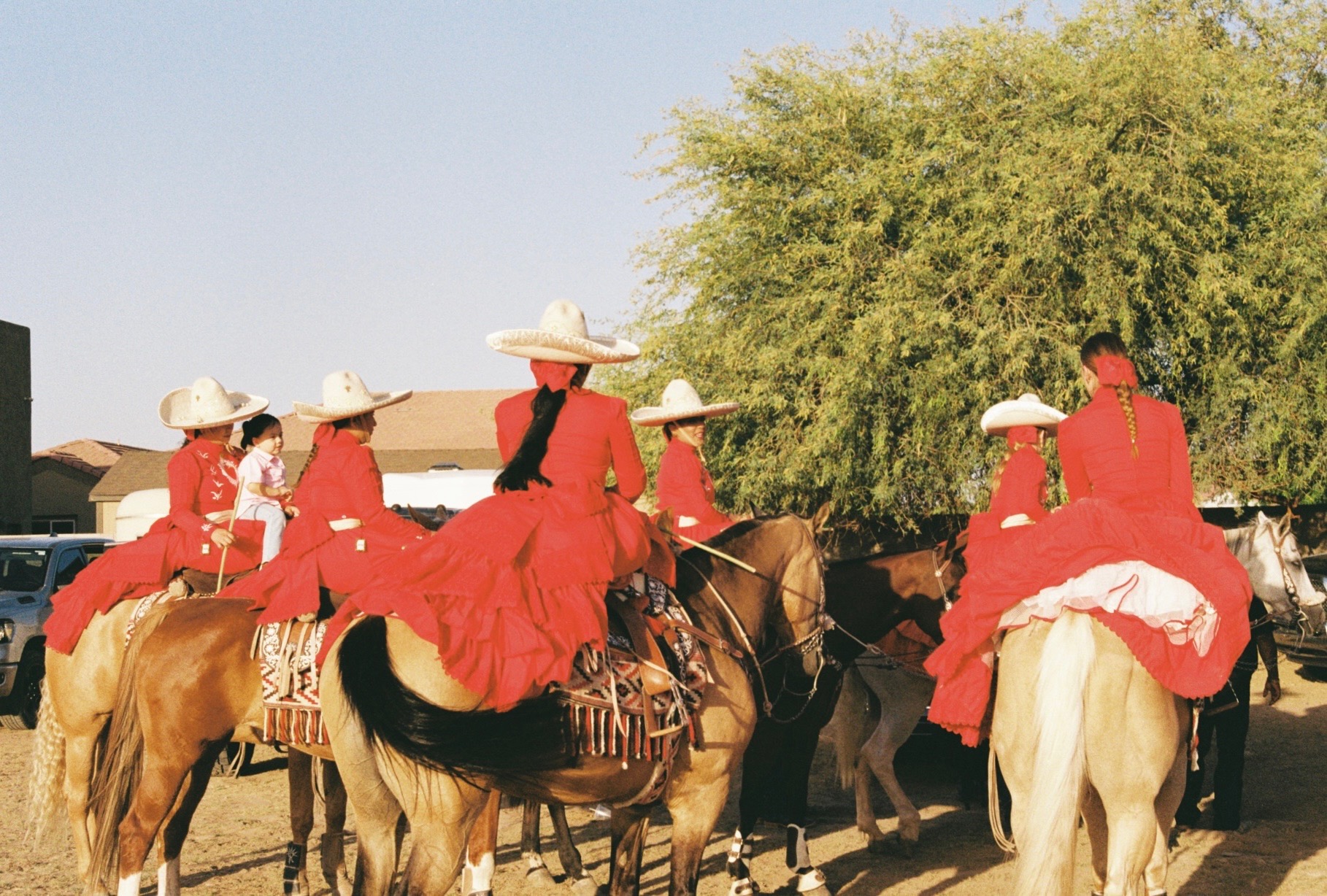
A: And then talking about it from a fashion lens. You made it a point to really capture the regality of the fashion of this sport. I feel like it's impossible to talk about the sport without talking about the fashion of it. Of course, you have so many photos that are just of practice, but capturing the showmanship of the sport, was that a specific lens that you took?
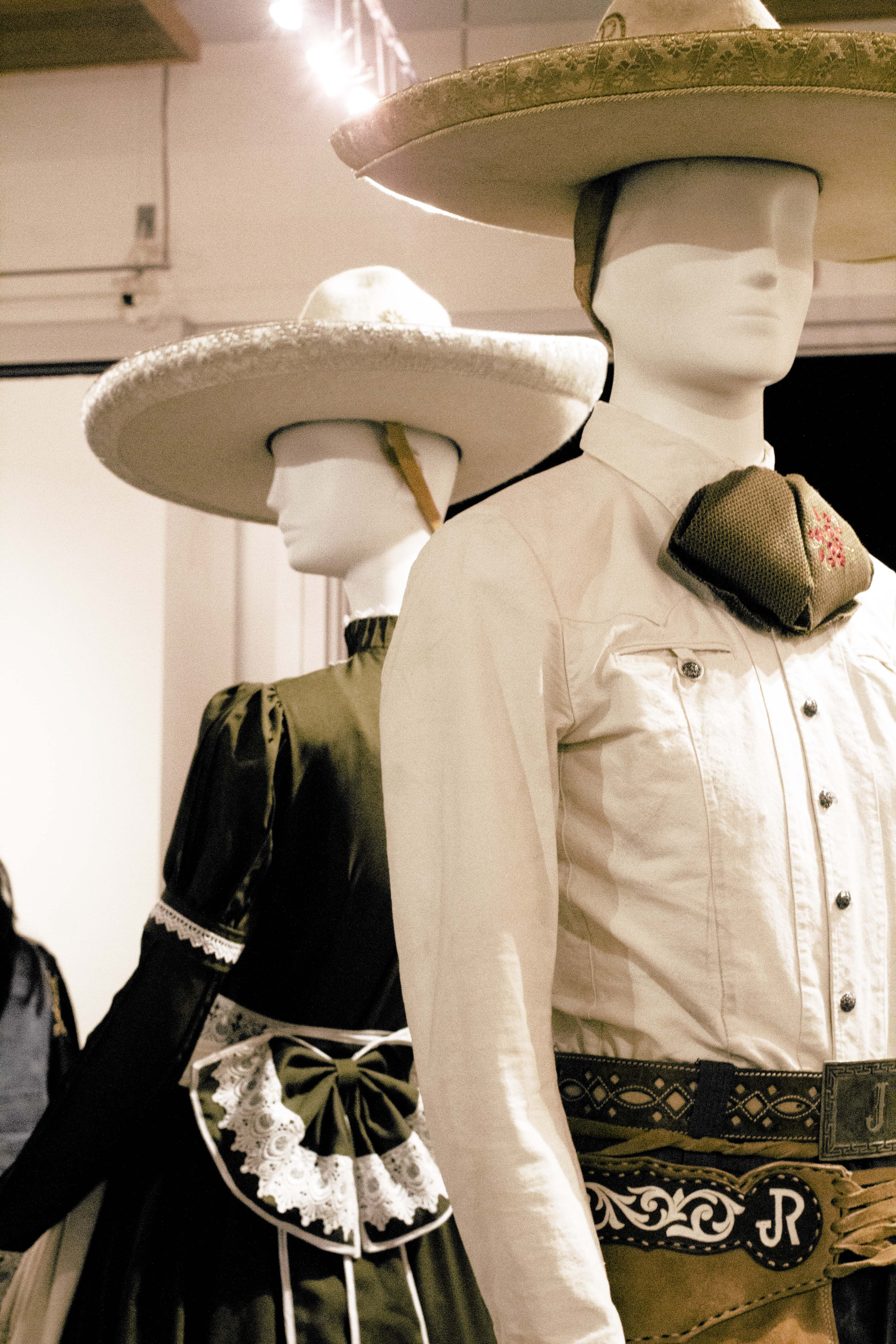
BT: For sure. When you look at the film wall that is literally titled “Charrería: A Living History in Practice”, it's so important to look at the clothing that they're wearing, especially on that wall. You see the women are wearing denim jeans, and during an event, they would absolutely never, ever, ever wear that. For me, bringing in the mannequins was so important. It's important because you can see the images; they're flat, though. And obviously, I didn't want anyone to show up in something that they wouldn't normally wear. But having the outfits in the center of the room, you're able to look at the image and be like, wow, there's so much going on. They have to wear all of this, and then you turn around, you actually get to see it, and you get to interpret it in the context of being in South Phoenix. Being in Arizona, it's 100 million degrees in the middle of summer, and they're literally wearing this.
The fashion aspect was very important. The color of the dress, that specific one, I'm so glad that we got to use that one. The olive green is just so perfect with the room in general and the feel of it. I just wanted people to feel transported, and I knew color was gonna play a role. I knew the scent of the room was gonna play a role. I knew how loud the music was on opening night. It's different than what it is right now. All of these aspects, every “i” needed to be dotted.
A: I was like, how could the show get any better? And then the mariachi show up, and it's the backdrop of downtown Phoenix,
BT: And you see the blinking red lights from South Mountain. And you got the conchas and the churros from La Purisima.
A: As we wrap up, I wanted to close with how slowing down your practice affected you. This isn't your first time taking a longer approach at producing a larger body of work.
BT: This might be the longest. It's definitely the most intense. I think I've spent maybe the same amount of time, saying I'm working on something, but this is definitely the longest amount of time I've sat down and done one. I have not produced anything else other than what is in that show this year.
A: What did you learn from this process that you're going to take with you and how you want to approach your work going forward? I met you at a time where Instagram was the main way that we were sharing our artwork, and over the years, we both kind of slowed down our processes a lot more. But you also have experience in working in the museum, and now you're in this contemporary art space at the Phoenix College as well. If there's anything that you can offer right now in terms of what you feel like, this process has taught you about approaching producing a body of work in the future.
BT: I think what I learned the most is that we just need to remain true to culture and to identity. That is something that will come with me no matter what it is I'm working on, even if it’s a fashion campaign for a brand. If you don't come at it from grounding yourself in reality, of where you come from or what it is that has made you what you are, you can't exist. There's nothing of substance to provide to people. I always say that creating art is literally so selfish, because you're asking people to come and interpret it. You're asking people to come and look at it, which in turn, is selfish. I think when you're able to bear your soul and you're able to show the reality of what it is to be a human being, that is the pot of gold at the end of the rainbow. So for me, that's what I learned. I felt like I knew it, but now I know it. That's something that I will forever take with me. And it rings so true for this show, so that'll come with me everywhere I go.
A: That's so amazing. What a gift to give to yourself. You're still studying so you're literally at the beginning stages of your career. So it's like, what a great investment to give to yourself and a great foundation to give to yourself as an artist now, because, like, it takes some people years to arrive at that. Just really getting to the core. I feel like that's where it resonates the most with people.
So to go hand in hand with that question, this is more of a Phoenix art scene question, as you are surely asserting yourself as a proud South Phoenix Artist. From a bigger picture sense of art scene development here and supporting, like emerging talent and stories that are still not told here truthfully, because this place is so young, honestly, in comparison to the rest of the country. What would you hope to see come forth in this art ecosystem?
BT: I want to see the same blueprint that I just laid out, of involving the community in it, bringing school groups. I reached out to them, they didn't reach out to me. That was not a part of my grant. That was not anywhere in the outline of what I was supposed to do. I did not have to do that, but I knew that it was important to try and create those connections and share it with people who maybe would never have seen this. I wish I would see that more in the Phoenix community, the want to create, create outreach, and that want to engage the community. As I just mentioned, it is selfish to create work, so doing everything in your power to take away that selfishness and take away the ego and be like, all right, we just put our all into this. We did everything that we could possibly do in order to create this. So now, in order to pay my respects back to the community who's in the work, I will be in this gallery every single day and giving tours to people for free so that they can learn about it. I owe it to them. I wish I saw that perspective a little bit more in the Phoenix art scene. And I don't know if it's in LA. I don't live there, but I think, since it is so new, we have stories to share, so let's share them. And how do we do that? We engage the community.
N: I feel like a lot of this interview is me agreeing with Adam. But particularly as someone who does appreciate art, but perhaps is not actively in the art community here in Phoenix, I can only echo what Adam said. I do see art, I do see artists here, but I think the areas of improvement or things that are missing are exactly that. Its artists really taking the time to not just invest in their work, but to bring that to a large group of people, and through means other than just showing at a gallery. Through means other than just having it at a museum. I think that's great, but there's such a missed opportunity for engagement, for invitation, for even offering a perspective and a lens. And through all of those means, I think when you add all of that together, you get true education. I think that community outreach and building community, and including your community goes hand in hand with education. I have learned so much through this process. I came in thinking one way and left thinking a completely different way. I am not just proud of my skills and my ability, but how much I've learned and seeing firsthand what that engagement within your own community looks like. I thought it was going to be pretty cut and paste. Hey, we're going to do this. We'd love for you to be a part of it. We're going to shoot a couple of pictures of you and follow you around, and then this is going to be out someday, right? And really, what ended up happening was we ended up forging deep and meaningful relationships with our participants. And through that, not only did we learn about ourselves, but we learned about one another, not just us as team members to our participants, but as a family. I would love to see more of that in the community, absolutely.
A: I'm just so proud of you, and I'm glad that you found your way back to yourself.
BT: Seriously though, sometimes, while growing up, you find yourself. Sometimes you do.